Jun 18, 2026
Blog

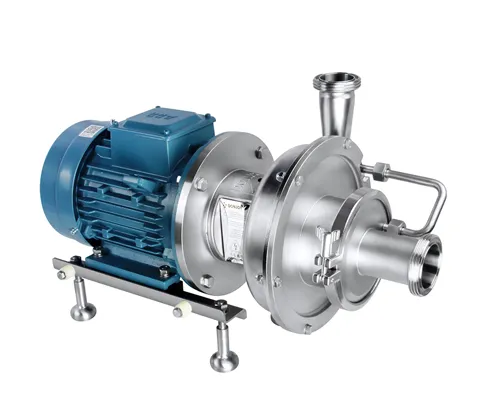
Pumps used in hygienic processing must transfer products efficiently without creating unnecessary retention, contamination risks, or cleaning difficulties. Two of the most common pump categories are centrifugal pumps and positive displacement pumps.
A centrifugal pump is often selected for water-like liquids, circulation processes, and high-flow transfer. Positive displacement pumps are generally considered when the medium is more viscous, the flow must remain relatively stable, or the product requires gentler handling.
Neither pump type is automatically better. The correct choice depends on product viscosity, required flow, discharge pressure, solids, suction conditions, cleaning procedures, and process-control requirements.
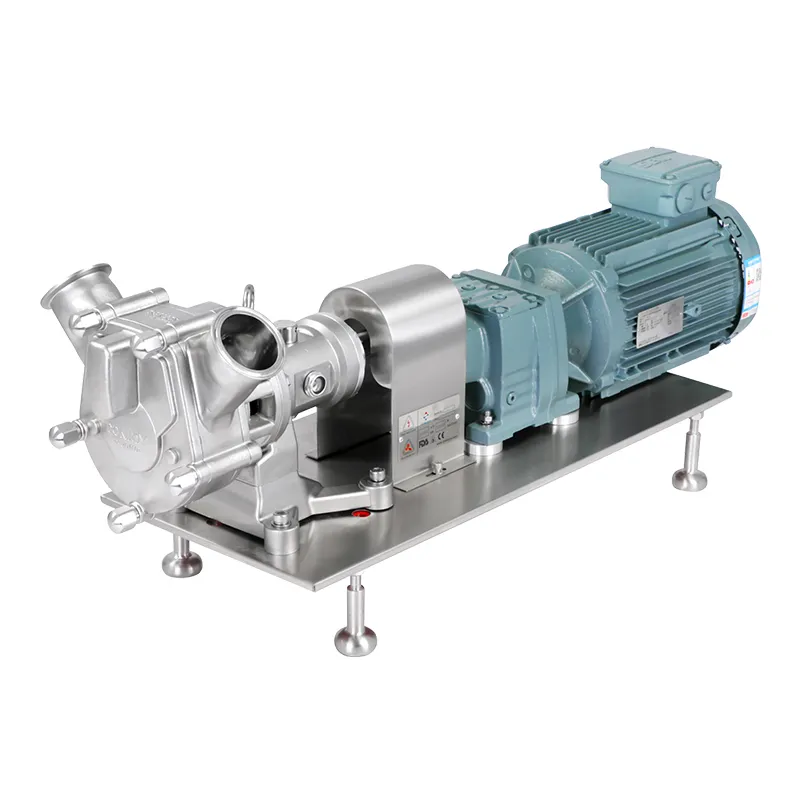
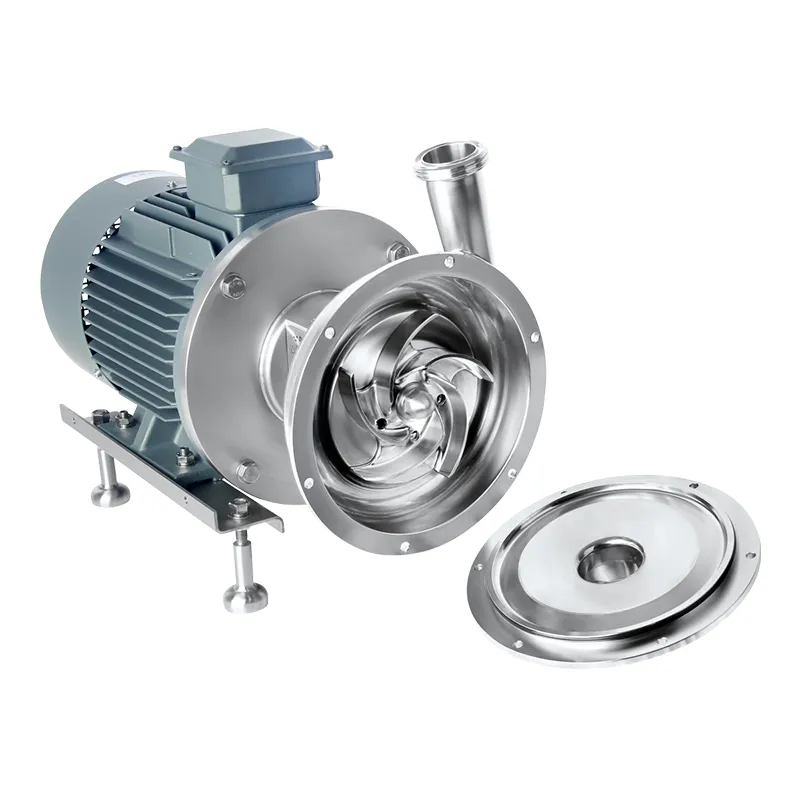
A sanitary centrifugal pump uses a rotating impeller to increase liquid velocity. The pump casing then converts part of this velocity into pressure and directs the liquid toward the discharge outlet.
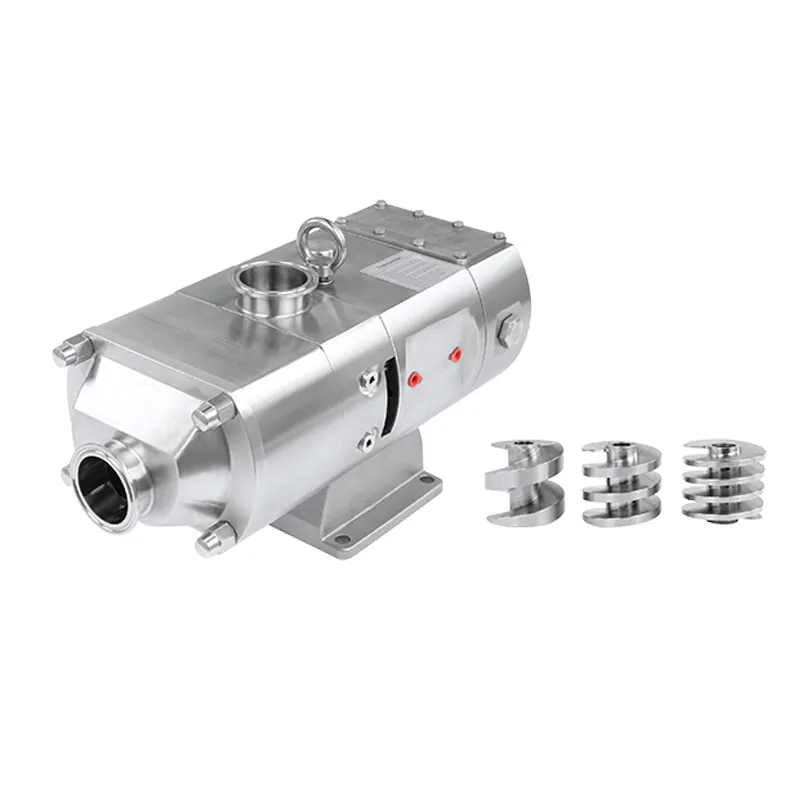
A positive displacement pump moves a defined quantity of liquid during each shaft rotation or operating cycle. Common hygienic examples include rotary lobe pumps and twin-screw pumps.
The operating point of a centrifugal pump changes according to the resistance of the connected piping system. When system resistance increases, the flow delivered by the pump generally decreases.
A positive displacement pump produces a relatively stable displacement per revolution. The final flow is closely related to pump speed, although internal slip and product properties can affect actual performance.
Because a positive displacement pump continues moving liquid against increasing discharge resistance, suitable pressure protection is particularly important. A relief valve, bypass, or other protective device may be required according to the pump design.
The following comparison provides a practical starting point for evaluating centrifugal pumps vs positive displacement pumps:
| Selection Factor | Centrifugal Pump | Positive Displacement Pump |
|---|---|---|
| Typical liquid | Low to moderate viscosity | Moderate to high viscosity |
| Flow behavior | Changes with system resistance | Relatively stable per revolution |
| Typical advantage | High flow and circulation | Viscous-liquid transfer |
| Flow adjustment | Speed or discharge control | Mainly speed or bypass control |
| Solids handling | Depends on impeller and clearance | Depends on the pump structure |
| Dry-running ability | Generally not recommended | Depends on the pump and seal |
| Pressure protection | System-dependent | Relief protection is important |
Water, beverages, and low-viscosity cleaning liquids often suit centrifugal pumps. Syrups, creams, concentrates, and other viscous products may be better suited to a positive displacement pump.
However, viscosity should not be considered alone. Required flow, product sensitivity, available suction pressure, transfer distance, and cleaning procedure must also be reviewed.
A centrifugal pump may be suitable when:
The liquid has relatively low viscosity
The required flow rate is high
The inlet remains flooded
The process involves circulation or transfer
The flow can vary according to system resistance
A positive displacement pump may be more suitable when:
The liquid has relatively high viscosity
Stable flow is important
The product requires gentle handling
Suction conditions are demanding
Lower-speed transfer is preferred
Correct centrifugal pump selection starts with the required flow and total dynamic head. Total dynamic head includes elevation, pipe friction, valves, heat exchangers, filters, and other system resistance.
The buyer should also provide:
Product density
Product viscosity
Operating temperature
Solid-particle content
Suction pressure
Required discharge pressure
Cleaning temperature
Connection standard
Available power supply
Required mechanical-seal arrangement
A liquid that is easy to pump at room temperature may behave differently after cooling, heating, or concentration. An increase in viscosity can reduce centrifugal-pump flow and efficiency compared with its water-based performance curve.
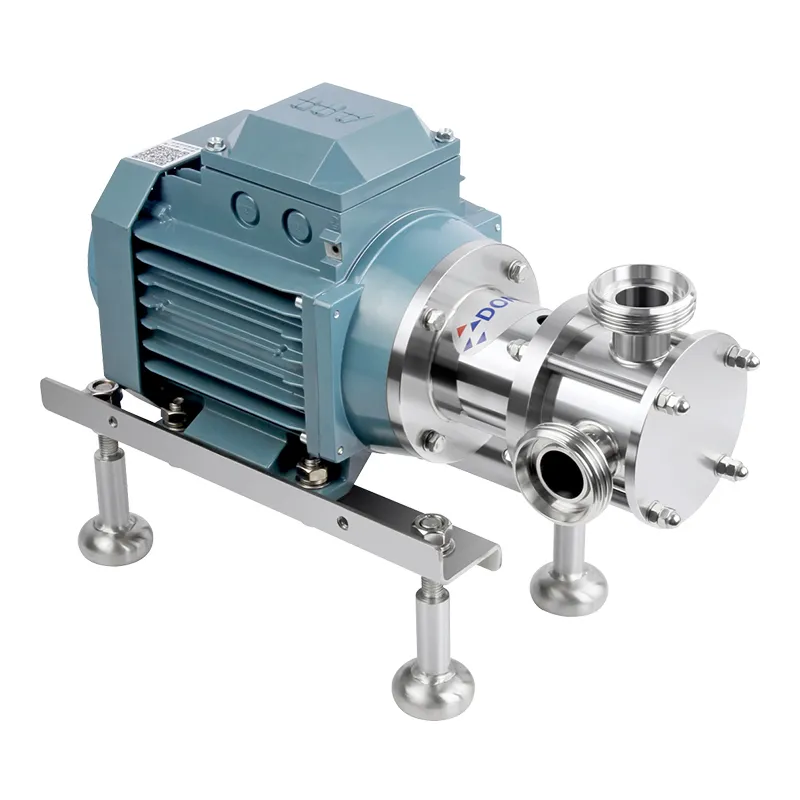
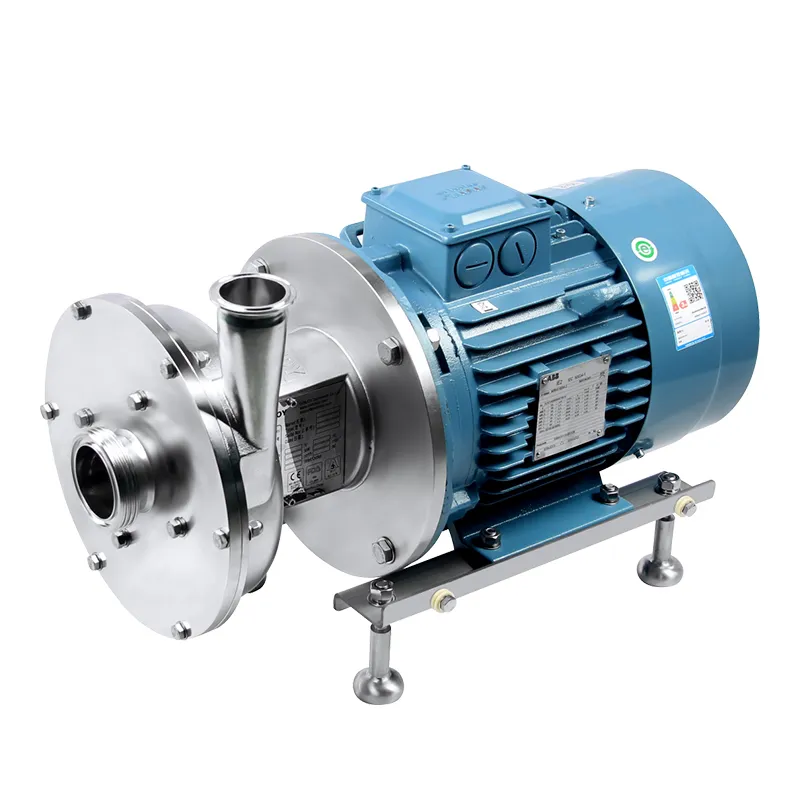
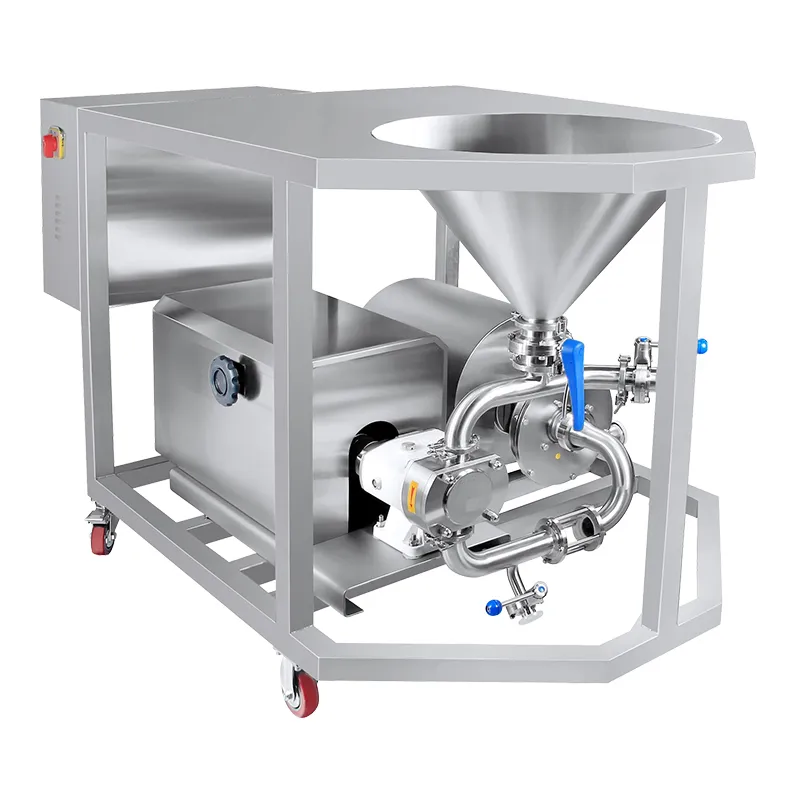
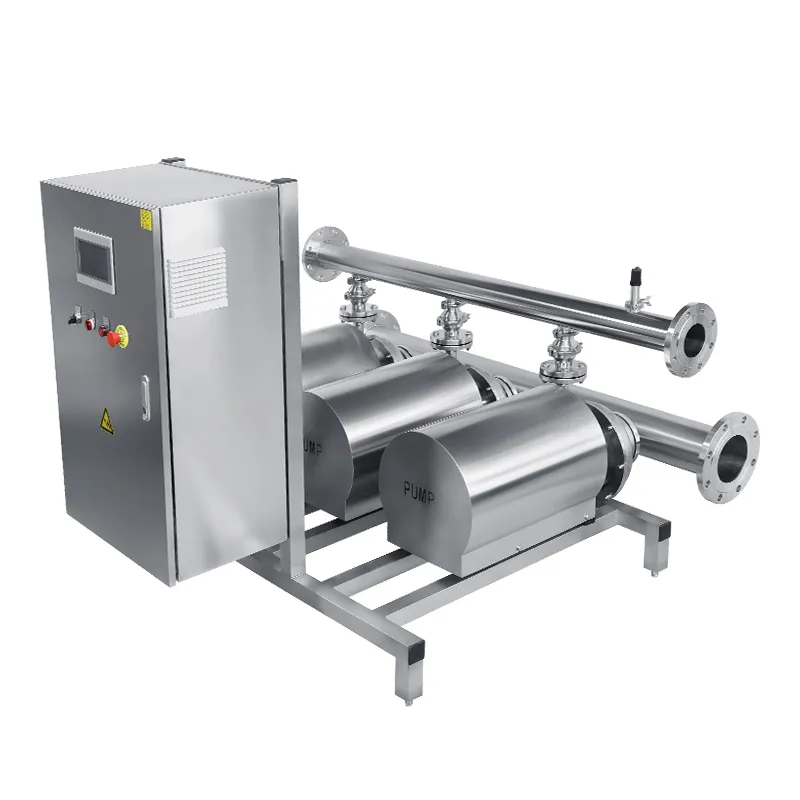
DONJOY’s sanitary centrifugal pump range covers several series and publishes maximum ranges of up to 120 m³/h flow and 70 m head. For applications requiring additional mixing and homogenizing functions, DONJOY also provides donjoy pump solutions designed for efficient product blending and hygienic processing requirements. These values represent the overall product family and do not mean that every model simultaneously delivers the maximum flow and maximum head.
The selected model should be based on its individual performance curve. The required operating point should be marked on the curve to confirm the appropriate pump size, impeller, and motor.
Selecting a pump only according to inlet and outlet diameter can result in insufficient flow, inefficient operation, excessive vibration, or unnecessary energy consumption.
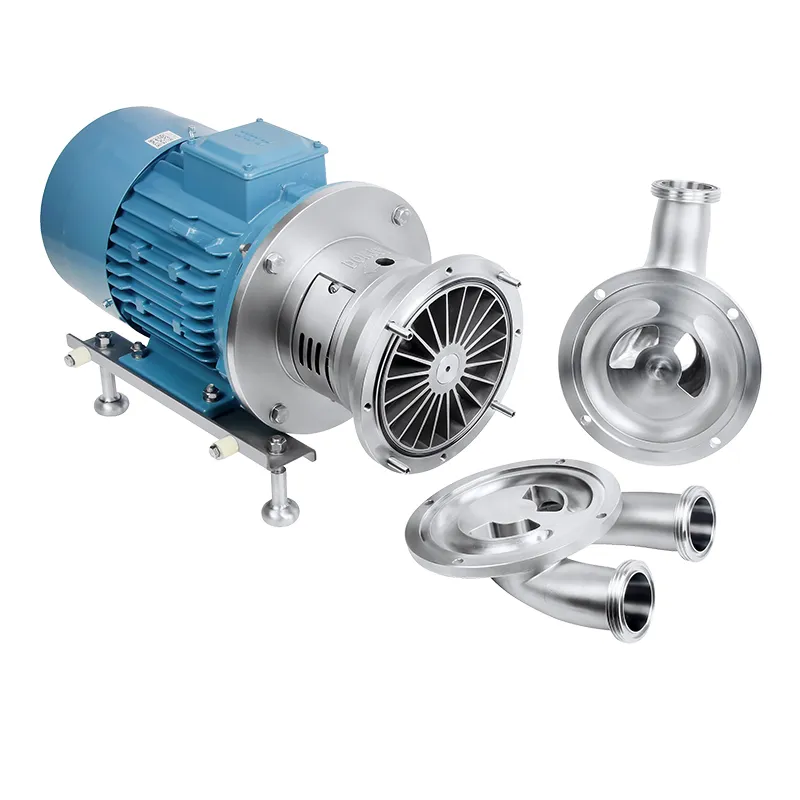
A stainless steel centrifugal pump for food, beverage, dairy, or pharmaceutical processing should use appropriate product-contact materials and provide smooth internal surfaces.
DONJOY offers SS304 and SS316L material options within its sanitary centrifugal pump range. The category also includes product-contact surface finishes down to Ra ≤0.4 μm and configurations intended for CIP or SIP applications.
The appropriate material depends on the product, corrosion conditions, cleaning chemistry, and customer documentation requirements.
The mechanical seal is another important selection factor. A centrifugal pump with mechanical seal may require different seal faces, elastomers, or cooling arrangements according to product temperature and lubricating characteristics.
A single mechanical seal may be sufficient for many standard liquid-transfer duties. More demanding applications may require a flushed or double mechanical seal.
The buyer should confirm:
Product and cleaning temperatures
Whether the medium can lubricate the seal faces
Whether external seal water is available
Seal-water pressure and quality
Compatibility between the elastomer and detergent
Whether temporary dry-running conditions may occur
Drainability and cleanability should also be reviewed. Even when the pump has a hygienic structure, poor piping slope, dead legs, or unsuitable valves may reduce the effectiveness of the complete cleaning system.
Changing centrifugal pump speed affects flow, head, and power demand. A variable-frequency drive can therefore be used when the process requires different flow rates or pressure conditions.
A complete centrifugal pump control system may include:
Direct on-off operation
Variable-frequency speed control
Pressure-based adjustment
Flow-based adjustment
Tank-level control
Motor overload protection
Integration with an automated CIP sequence
A VFD allows the operator to adjust pump performance without relying only on a discharge valve. However, the permitted speed range should be checked against the pump curve, motor cooling requirements, and minimum-flow conditions.
Operating far from the recommended performance region may increase vibration, internal recirculation, and component wear.
The supplier should therefore evaluate the complete duty point rather than recommending a pump solely according to motor power or connection size.
For CIP supply, a centrifugal pump is often used to deliver a stable high flow from a filled cleaning tank. When the return line contains air or cannot maintain flooded suction, a self priming pump may be more appropriate.
The supply and return pumps should be evaluated together so that cleaning liquid circulates reliably through the complete system.
One frequent mistake is selecting the pump according to the maximum published flow instead of the actual duty point. The pump may then operate far from its efficient range.
Another mistake is ignoring changes in product viscosity. A pump selected using water-based assumptions may not deliver the same performance with a thicker liquid.
Other common mistakes include:
Failing to calculate total dynamic head
Ignoring suction-pipe losses
Selecting only according to motor power
Assuming that a centrifugal pump can run dry
Using an unsuitable seal material
Omitting VFD limits from the control design
Ignoring future production-capacity requirements
Failing to consider CIP return conditions
A larger motor alone does not guarantee more flow. Hydraulic performance is determined by the pump casing, impeller, speed, and connected system.
It can handle some moderately viscous liquids, but increasing viscosity may reduce flow, head, and efficiency. The actual viscosity should be provided during selection.
A centrifugal pump is commonly used for high-flow CIP supply when the suction remains flooded. A self-priming design may be considered for return lines containing air.
Continuous dry running is generally not recommended because the mechanical seal may depend on the pumped liquid for cooling and lubrication.
Not necessarily. Product shear depends on pump speed, internal geometry, pressure, clearances, and operating conditions.
No. Flow depends on the impeller, speed, and system curve. Installing a larger motor cannot correct an unsuitable hydraulic selection.
Provide required flow, total head, product, viscosity, density, temperature, solids, suction pressure, connection standard, voltage, and seal requirements.
For low-viscosity hygienic transfer and circulation, a correctly selected centrifugal pump can provide compact and efficient operation. A curve-based selection using actual process data is more reliable than choosing only by pipe size or maximum catalogue capacity.